
BIOGRAPHY OF PRINCE MAMUDU IKHARO (A.K.A. JAWSAY) THE ODION OF AUCHI
BY ALHAJI (PRINCE), OSMAN A. IKHARO
4 IKHARO STREET, AUCHI, BENDEL STATE APRIL 8, 1991
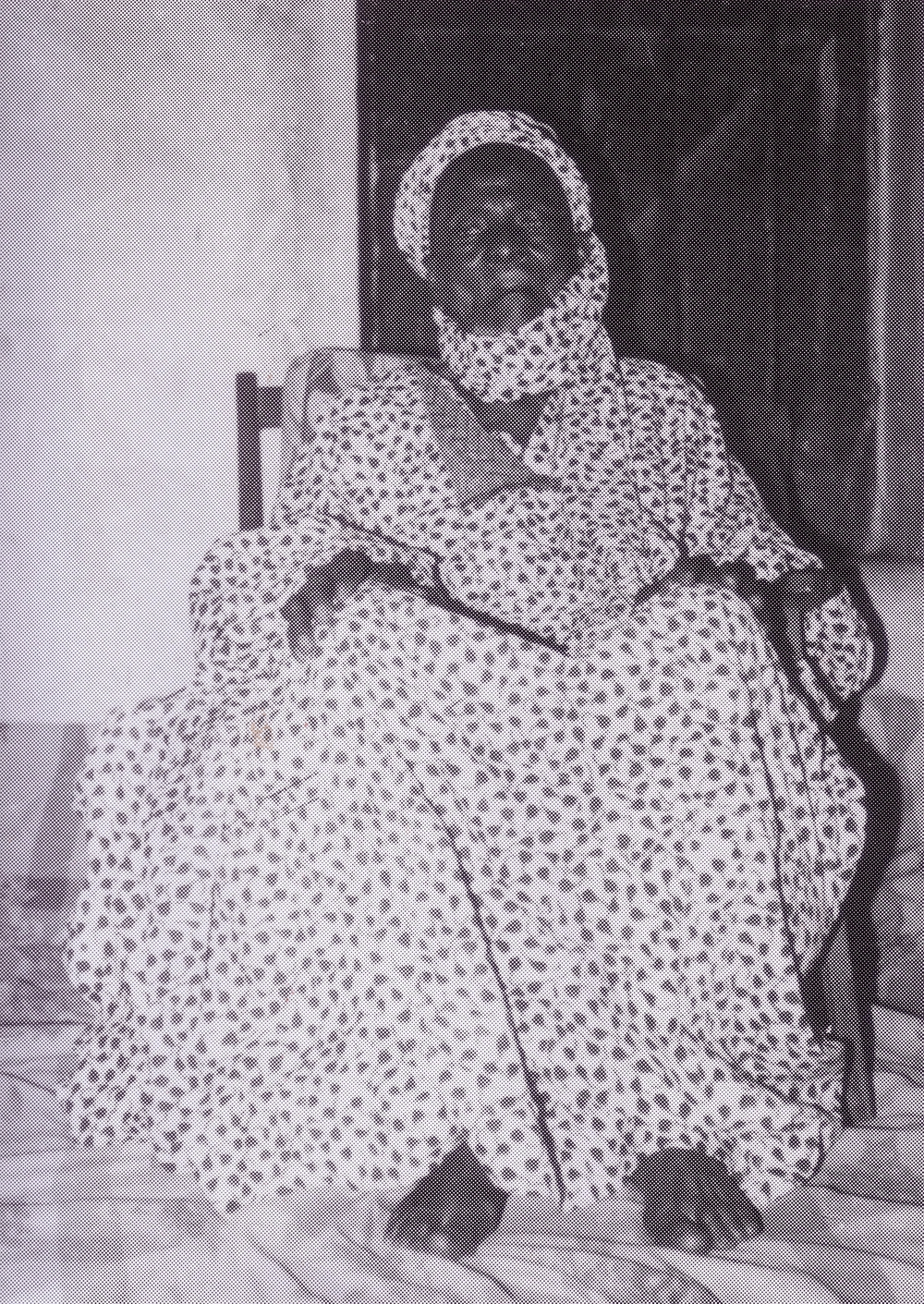
Prince Mamudu Johnson Imotsumhe Ikharo
PREFACE
A renown professor of history, Olatunji Oloruntimehin once postulated that “…the need to know the past in order to understand the present, and plan for the future can hardly be over-emphasized”. It is in this wise that I consider it necessary to document the life led by my elder brother, Pa Mamudu Ikharo (a.k.a. Jawsay) which, to my belief, will serve for identification, genealogy, inspiration, and reference purposes to kith, and kin.
Added to my experience of being a “close watcher” of Pa Mamudu is the interview I had with the old man, and some other necessary persons who provided me with other pieces of information about his life before my birth i.e. his early life. At this juncture, I express my profound gratitude to Pa Mamudu’s grand-son, Dauda S. Garuba, who in no small way assisted me while writing the profile.
BIOGRAPHY OF MAMUDU IKHARO (A.K.A JAWSAY)
“I am Mamudu, son of Ikharo. Ikelebe is my grandfather,” declared unctuously by the undaunted old man at 94. Prince Mamudu Ikharo was born into the Ikelebe ruling family of Auchi, in present day Bendel State of Nigeria, around 1896. His father, Ikharo, and grandfather Ikelebe were the 5th, and 1st Otaru of Auchi respectively. Pa Mamudu was born into ONABOR marriage system to Mrs. Fatimetu Ikhimeagie Ikharo from Ibie-Iyakpi. He was the 12th in a polygamous home of 28 children.
At the time of Pa Mamudu’s birth it was customary in Auchi for newborns to be named by the oldest man of their respective families. Thus, it was to ensure a perfect continuity of this long time established tradition that Chief Idao Ikelebe (then the third Otaru of Auchi) performed Mamudu’s naming ceremony with the name “IKHARO OMO-OTSU-NI TSO” (meaning, Ikharo has his own slaughtering shrine). After the ceremony, this name underwent a swift transformation to suit Mamudu’s father, and lessen the protracted burden of its pronunciation. This explained why Mamudu Ikharo was popularly known, and call “IMO-TSU MHE” (I have my slaughtering shrine) in his tender years.
However, the spread of Islamic faith to Auchi in 1897 which left, till date indelible impacts in the economic, and socio-political life of the people overtook “IMO-TSU MHE” as Mamudu’s name. It will be recalled that after the ascension to Otaruship in 1905, Ikharo Ikelebe (Mamudu’s father, and the fifth Otaru of Auchi) converted to Islam, and renamed his six wives, and children according to Muslims’ tradition; no wonder Imo-tsu-mhe was re-named Mamudu.
What marvels one most about Mamudu’s name is that in spite of the low-keyed relationship between the people of Auchi, and British colonizers during his tender years, he was popular with the English name “Jawsay” (corruption version of Johnson). It is however, on record that his father’s reign as Otaru witnessed the advent of British colonization, and administration in Auchi. Hearing from the horse’s mouth, Pa Mamudu attributed the moving spirit behind this name (Jawsay) to one Briton (Mr. Johnson) who once registered him, and some other Auchi children as would be benefactors of western education. He said further, that the instant, and princely love shown him by this Briton reached culmination when he (the Briton) pet-named him Johnson. He, nevertheless, disclosed that this bid to send him to school soon headed for the rocks as his paternal grand-mother was opposed to western education. This was for no other reason than that, he was then the only reward of his mother’s marriage which had lasted for many years; hence he was held in sacrosanct? However, it should be noted that at this juncture even after his withdrawal from the would-be benefactor of “OYIBO” learning i.e. western education, Mamudu’s pet-name (Johnson) remained undying.
Pa Mamudu Ikharo started farming, as a career on the order of his father at adolescence age. Before his manhood initiation in 1919 (the year his father died) he had been a big time farmer with much harvests to offer. On maize alone, Pa Mamudu produced more than needed by his immediate family of the same mother. He joined other Auchi big-shots (farmers) in the burning of a year old stored maize every year to make room for the storage of the current harvests; since this crop was then so common that nobody accepted it as a gift.
The above was the general practice in Auchi before Jawsay got intimated with the profit yielding corn trade to Onitsha by one of his bosom friends, Aliu Erameh, who until his retirement was a court messenger. He thus became the first person in Auchi to go on a corn-trade mission to Onitsha.
Apart from this, the Prince was a renowned grower of cocoa, plantain, and banana, pears, oranges, pineapples, and the likes. He also possessed great skill in palm oil processing. Born to an Ibie woman, one need not be told that Jawsay would never allow the high-ladder position attained by the Ibie people in the production of quality palm oil to go unexploited.
Three months after his father’s death in 1919, the assiduous, and industrious farmer got married to his wife Mrs. Ladi Ikharo from Iyuku. He married a second woman, late Salamotu Ikharo three years after the first wife. Besides the above wives, Pa Mamudu also married late Zuma, late Ketumi, and late Azumi. Others are Meremu, and former Mamuna. Off-springs of his marriage life are Ketumi Oseni nee Ikharo, and late Ms. Rametu (same mother, Ladi), Abdul-Mutalebi, and Momodu (same mother, Salamotu); late Abdul-Kareem, Mallam Hamuzat, late Zibiri, Meremu S. Garuba nee Ikharo, Ajara Momoh nee Ikharo, Yahaya, late Ayuba, and Momoh-Jimoh (same mother, Zuma); Others include late Abdul-Kadiri (Ketumi); Abubakar, and Bekisu Ismaila nee Ikharo (Mamuna); Nefishetu (Meremu), and Ms. Asimawu Ikharo (born by late Azumi).
In sum, Pa Mamudu had 17 children and 86 grand-children, 25 great grandchildren, and 4 great-great-grandchildren. Prince Mamudu has never in the least allowed his duties to his younger ones elude him even at the task of raising his large family. For instance, in a demonstration of his monumental responsibilities to them, he apprenticed his immediate younger brother Alhaji (Mallam) Audu Ikharo to one hausa trader Momoh Iyeye who was one of his close friends. He also sent Alhaji Osman A. Ikharo to Lokoja, after initiating him into manhood where he later applied to Kaduna, and got enlisted into the police force in 1937. The death of Mamudu’s mother on June 4th 1960 increased the former’s matrimonial responsibilities. In this wise, he retired from farming, this same year to give full time concentration to hand-knitting of cloths which again added to his already won renown skills. Old age further precipitated his resignation from this trade, only to be left with the regular observance of the five daily Muslim worships.
The above was the situation when on June 6, 1983, Pa Mamudu attained the senior stool of Ikelebe royal family on the death of Abu Ikharo (a.k.a. Office); the position he celebrated on the 23rd of March 1984. On the 13th of February 1987, he beca-:2 the eldest person of Usogun one of the five quarters that make up Auchi. He held a thanksgiving cum happy moment celebration for this Allah-done-favor, on August 15, 1988, to demonstrate his acceptance of Quran 93-11 that: “And as for the favor of your Lord, do announce (it).”
By January 2, 1991, Pa Mamudu Ikharo (a.k.a.Jawsay) had every reason in this universe to be more grateful to Allah, and feel on top of the world as he became the ODION OF AUCHI.
|
Wives |
Children |
Grandchildren |
| 1. Iladi | 1. Ketumi Oseni (nee) Ikharo | Fatimetu, Jafaru, and Momoh |
| 2. Rametu | ||
| 2. Salametu | 3. Abdul-Mutablebi | Beriketu, Abdul-Salami, Ismaila, Sekinetu, Meremu, Muhammed, Buhari, Adizetu, Awa, Remetu, Odion, and Omomo |
| 4. Muhammed Jolingo | Sadiq, Sule, Rafatu, Idris, Nana, Hasibu, Aliu, Sedetu | |
| 3. Zuma | 5. Abdul-Kareem | Abibetu, Aminetu, Salmanu, Abdul-Shokulu, Sadetu, Sametu, Musa, Kasimu, Abdul-kurasih, Aliu, Abdul-Khaliq, Inu, Mujidat, Nasiru, Aishetu, Mawyetu, Sekinetu, Nefishetu, and Mamudu |
| 6. Hamazat | Lefiatu, Rukayetu, Moshood, Fatimetu, Talikan, Mariam, Abdulai, and Rashidetu | |
| 7. Zibiri | ||
| 8. Meremu S. Garuba (nee) Ikharo | Anidu, Safiatu, Dauda, Reshedetu, Salimotu, Muhammed-Jamil, Nimetu, Netifetu, Abdul-Kudus, and Saliu | |
| 9. Ajaratu Momoh (nee) Ikharo | Medinat, Abdul-Fatai, Sametu, Yahaya, Afishetu, and Yusuf. | |
| 10. Yahaya | Muhammed, Yunus, Aishat, Abdul-Rasheed, Abdul-Mujab, Abdul-Jaleel, Abdul-Qawiyyu, and Zayyad | |
| 11. Ayuba | ||
| 12. Momoh-Jimoh | Zuma (Zenebu), Jibril Amainesi, Mamudu Momoh-Jimoh Erelumhe | |
| 4. Ketumi | 13. Abdul-Kadire | |
| 5. Mamuna | 14. Abubakar | Lucky, Mujidetu, Odion, and Omomo |
| 15. Bekisu Ismaila (nee) Ikharo | Adbul-Lamidi, Mariamum, Muhammed-Kabir, Abibetu, and Rakhaiatu | |
| 6. Meremu | 16. Nefishetu | Abdul-Razak, Aminetu, and Adizetu |
| 7. Azumi | 17. Asimawu |